
UNDERSTANDING REWARD AND MOTIvATION SYSTEMS
The brain’s reward system is essential to daily life. It helps us to enjoy things that are good for us, avoid things that are bad for us, and learn from our experiences. It starts to develop early in life and continues to change throughout our lives in response to our experiences.
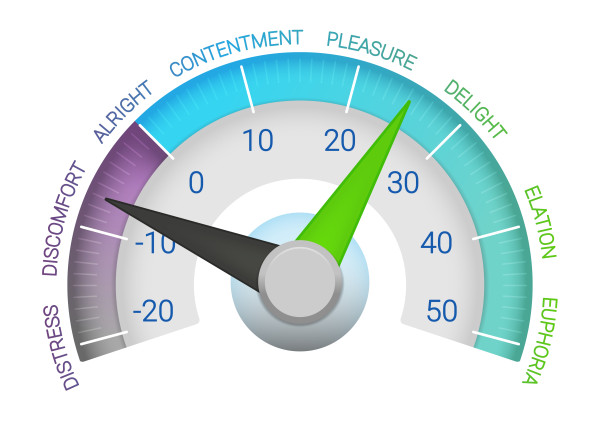
One way to think about the brain’s reward system is as a Reward Dial, similar to a volume control. Just like how adjusting a volume slider changes the volume, our experiences can turn our Reward Dial up and down. The “volume” is how strongly we feel reward.
When our Brain Architecture is supported by a sturdy foundation, positive experiences turn the volume up to make the feeling of reward stronger, and this motivates us to repeat those same behaviours. Negative experiences turn the volume down and create feelings that are unpleasant, which in turn motivates us to avoid those same experiences in the future.
There are two important parts of reward: wanting and liking. Wanting is our motivation to do or get something. Liking is how much we enjoy it. They often go together, but not always. Sometimes we can really want something even when we don’t enjoy it very much anymore.
Think about your phone. You hear a notification and feel motivated to check it. That’s wanting. You check your phone and enjoy what you see. That’s liking. But if you get repeated notifications, you may still want to check your phone even if you don’t like it very much anymore. Wanting and liking don’t always match.
The Reward Dial metaphor helps us understand that:
- Reward-seeking is normal and healthy - our brains are designed to seek rewarding experiences that keep us happy and healthy.
- Problems arise from system dysregulation - issues can occur when the calibration of the Reward Dial is disrupted, such as addiction.
- Recalibration is possible - with time and support, the Reward Dial can move toward healthy functioning.
-
Early Intervention matters - it's easier to build a well-functioning Reward Dial from the start than it is to recalibrate it later.
Two types of Motivation: approach and avoidance
The brain has two motivation systems:
1. Approach Motivation: Moving Toward Rewards
Approach motivation drives us toward rewarding and pleasurable experiences, which is important for learning new skills, exploring, and pursuing goals.
2. Avoidance Motivation: Moving Away From Threats
Avoidance motivation directs us away from threatening or unpleasant experiences, which is important for helping us to avoid dangerous or harmful situations.
How These Systems Develop
During the earliest years, reward and motivation systems are particularly sensitive to experiences. Babies learn basic preferences between things they like and do not like, and begin to tell the difference between real threats and less dangerous situations. For example, they might learn that certain loud noises like a sudden crash could be a real threat while others like the sound of a vacuum cleaner are harmless. With the consistent presence of responsive, supportive caregivers, children learn to safely and appropriately seek rewarding experiences, explore new things without becoming overwhelmed by fear, and respond to real threats with appropriate caution.
As children get older, their reward and motivation systems continue to develop and become more sophisticated. For example, they begin to understand the value of delaying an immediate reward in order to receive a greater reward down the line. Air Traffic Control skills are also being developed at a similar time, helping children to plan ahead and work towards longer-term goals. During the teen years, the brain becomes especially sensitive to social rewards – acceptance, recognition, and peer approval become very powerful motivators that shape adolescent behaviour.
The Reward Dial and Addiction
When functioning as it should, the Reward Dial responds to our experiences based on how big or small they are – a good meal might turn it up a bit, and spending time with loved ones a bit more. Addiction can lead to a ‘miscalibration’ of these Reward Dial settings.
-
Drugs, alcohol, and addictive behaviours don't just turn up the Reward Dial – they blast it to maximum volume repeatedly. This creates an artificial shortcut to intense pleasure.
-
Over time, what once felt like a 10 on the Reward Dial might now feel like a 5. The Dial has to be turned up higher and higher just to hear any sound. Activities that once brought joy, like hobbies, relationships, and achieving goals, may barely register on the Dial, making everyday activities feel less enjoyable.
Effective treatment helps to re-establish healthy sources of reward.